The rundown
Gastown's steam clock and the Marine Building's Art Deco lobby get the tour groups. The landmarks that actually explain how this city came to hold the communities it does tend to sit a few blocks off that route, largely unmarked. Here's where the real history is standing.
Powell Street (Paueru-Gai)
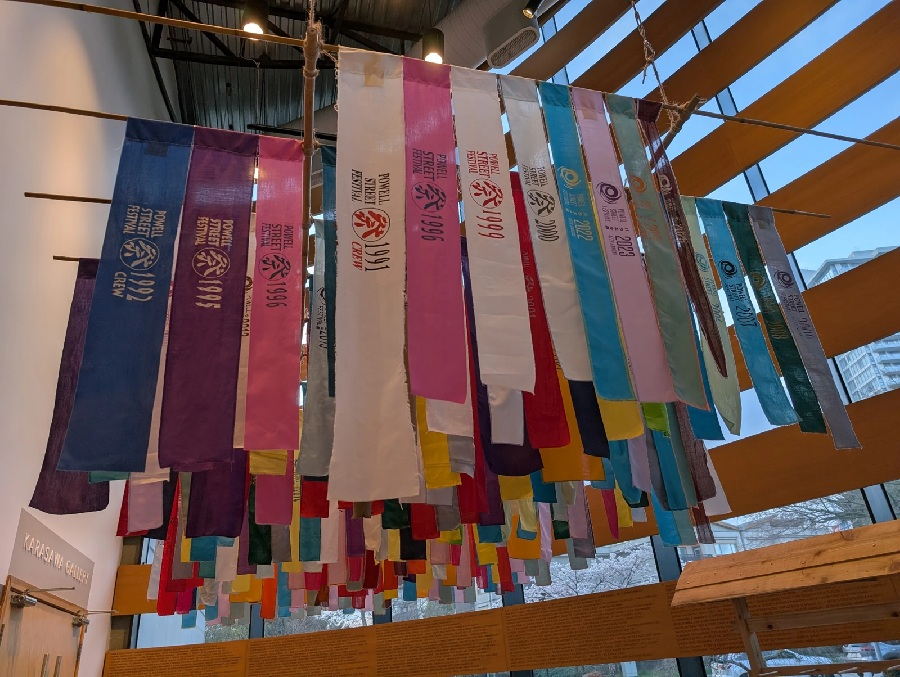
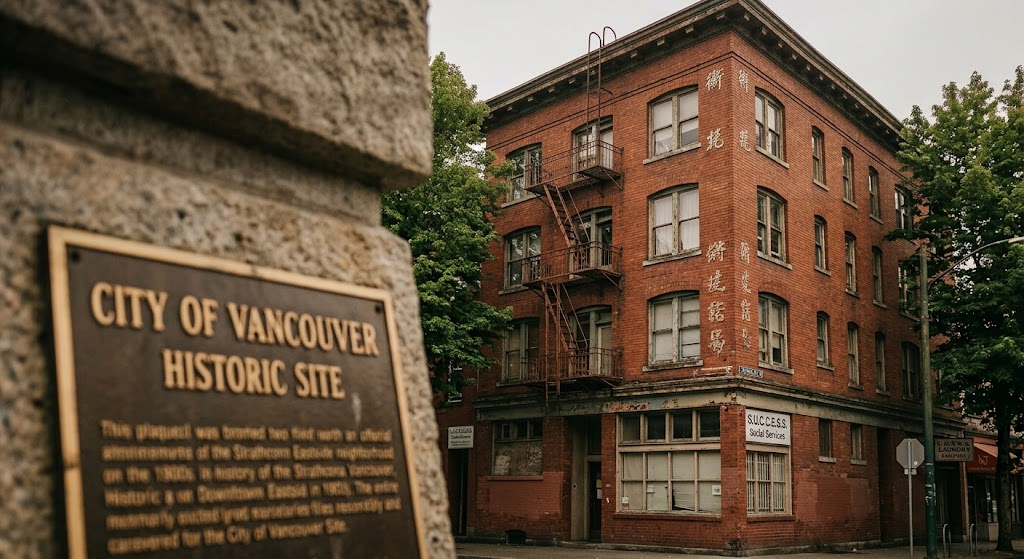
North Strathcona, centred on Oppenheimer Park. From the 1890s until 1942, this stretch was the commercial and social heart of Canada's largest Japanese community, home to roughly 8,000 Japanese Canadians and more than 400 Japanese-owned businesses, everything from bathhouses and sushi restaurants to the country's first Buddhist temple and Canada's oldest Japanese language school. The federal government forcibly displaced the entire community in 1942, seizing and selling their property, and Oppenheimer Park itself once hosted the celebrated Asahi baseball team before that history was largely erased from the neighbourhood's public memory. The area is still known by its Japanese name, Paueru-gai, and the annual Powell Street Festival keeps that memory active rather than purely historical.
What we're doing/ordering: Look for the Vancouver Japanese Language School and Japanese Hall on Alexander Street, one of the few original buildings still standing, and check whether a summer walking tour is running, the physical remnants of Japantown are subtle enough that guided context changes what's visible.
Hogan's Alley
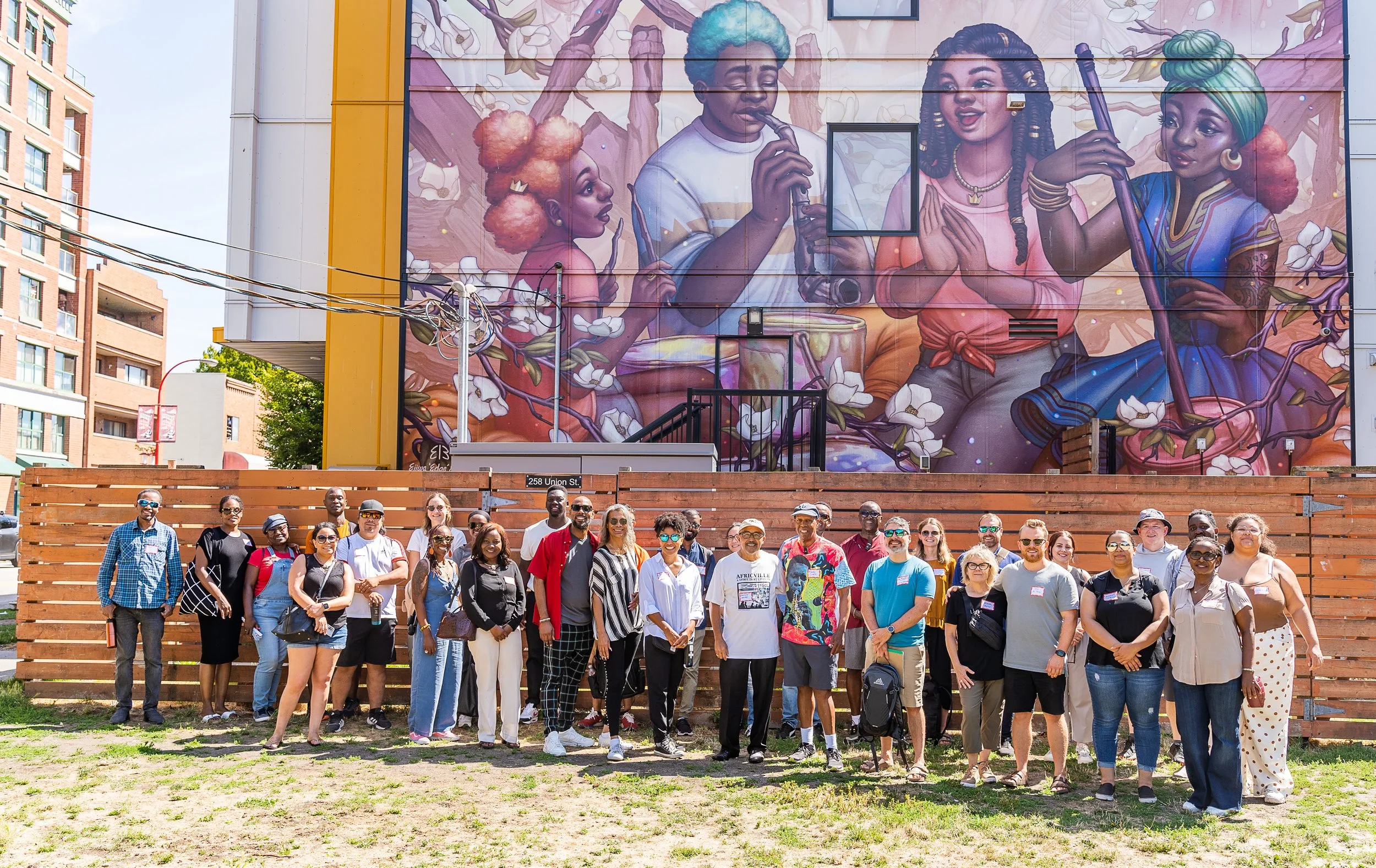
Near Main and Union streets, Strathcona/Downtown Eastside border. The historic centre of Vancouver's Black community from the early 20th century through the 1960s, Hogan's Alley was home to the Fountain Chapel, considered the neighbourhood's spiritual heart, alongside jazz clubs like the Harlem Nocturne where performers such as Choo Choo Williams built the area's nightlife reputation. The neighbourhood was largely demolished for the Georgia Viaduct's construction in the 1970s, displacing the community that had built it, and its history survives today mostly through oral history projects and archival photography rather than standing buildings.
What we're doing/ordering: Seek out oral history and archival photo projects documenting the neighbourhood before visiting the area itself, since most of the physical Hogan's Alley no longer exists, the story lives in records rather than in buildings still standing to explain themselves.
Chinese Freemasons Building
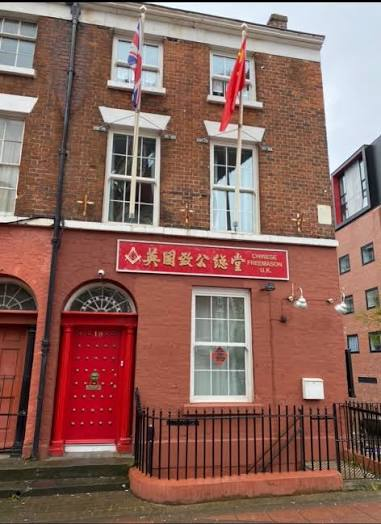
5 West Pender St, western edge of Chinatown. Built in 1901 and purchased by the Chi Kung Tong, later renamed the Chinese Freemasons, in 1907, this building blends Victorian commercial style on its Carrall Street face with traditional Chinese recessed balconies and ironwork on the Pender Street side. In 1910 and 1911, the organization hid Dr. Sun Yat-Sen from agents of the Chinese imperial government inside this very building, and reportedly mortgaged the property to help fund the 1911 Chinese revolution that followed. Only the two facades survive from the original structure, retained during a 1975 redevelopment in one of Vancouver's earliest heritage preservation efforts.
What we're doing/ordering: Look specifically at the contrast between the Carrall Street and Pender Street facades, that architectural split is the building's own heritage designation citation, and read up on the Sun Yat-Sen connection before visiting since nothing on-site explains it directly.
Old Hastings Mill Store Museum
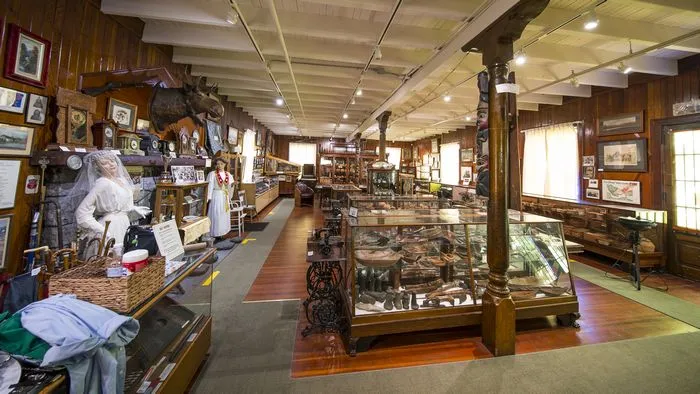
1575 Alma St, Point Grey. Built in 1865, this is Vancouver's oldest surviving building, originally the general store for Hastings Mill, the sawmill operation the entire city grew up around. It was one of the only structures to survive the Great Fire of 1886, serving as an emergency hospital and morgue for fire victims, before being barged roughly ten kilometres across English Bay to its current Alma Street location in 1930 to save it from demolition. The Native Daughters of British Columbia, a heritage preservation organization, still own and operate the building as a museum, exactly as they have since 1932.
What we're doing/ordering: Ask a volunteer about the building's 1930 barge relocation specifically, the museum still shows period film footage of the actual move, and look for artifacts from the SS Beaver, a historic steamship that wrecked off nearby Prospect Point in 1888.
Marine Building
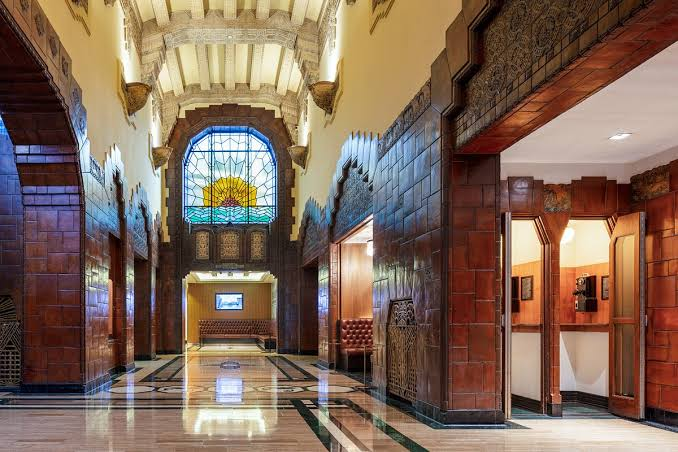
355 Burrard St, downtown. Completed in 1929, this 22-storey Art Deco skyscraper was Vancouver's first true high-rise and remains one of the city's most photographed buildings, its exterior covered in sculpted marine motifs, ships, seahorses, crustaceans, that reference the building's original maritime-industry tenants. The lobby's brass elevator doors and terrazzo floors have made it a recurring filming location for movies and television, but the building's actual historical footnote, its construction bankrupted the original developers just before completion during the Great Depression, rarely makes it into the standard tourist description.
What we're doing/ordering: Step into the lobby even without a reason to enter the building itself, security generally allows it, and look specifically at the brass and terrazzo detailing rather than just the exterior facade most photographs focus on.
The Pattern
Every one of these five landmarks explains a piece of Vancouver's actual population history that the standard tourist route skips entirely: a Japanese neighbourhood erased by wartime policy, a Black neighbourhood erased by highway construction, a Chinese heritage building that sheltered a revolutionary, the city's literal founding store rescued by a women's heritage society, and a Depression-era skyscraper whose own construction bankrupted the people who built it. Vancouver's most overlooked history isn't missing. It's standing in plain sight, mostly unmarked, waiting for someone to actually ask what happened here.